

There is a particular disappointment familiar to anyone who photographs outdoors. You wake before dawn, walk a mile in the dark, reach the viewpoint you have been thinking about for weeks — and the sky delivers a flat, milk-white nothing. Or the light is spectacular, but the picture you bring home is a muddle of fence posts, a car park and half a stranger's dog. Both problems are common, and both are fixable, though rarely in the way people first expect.
Most of what separates a strong landscape photograph from a forgettable one comes down to two decisions: what you allow into the frame, and how you handle the light you have actually been given. Neither requires expensive equipment. Both require patience and a willingness to look properly rather than hopefully.
Why Flat Light Flatters Nothing
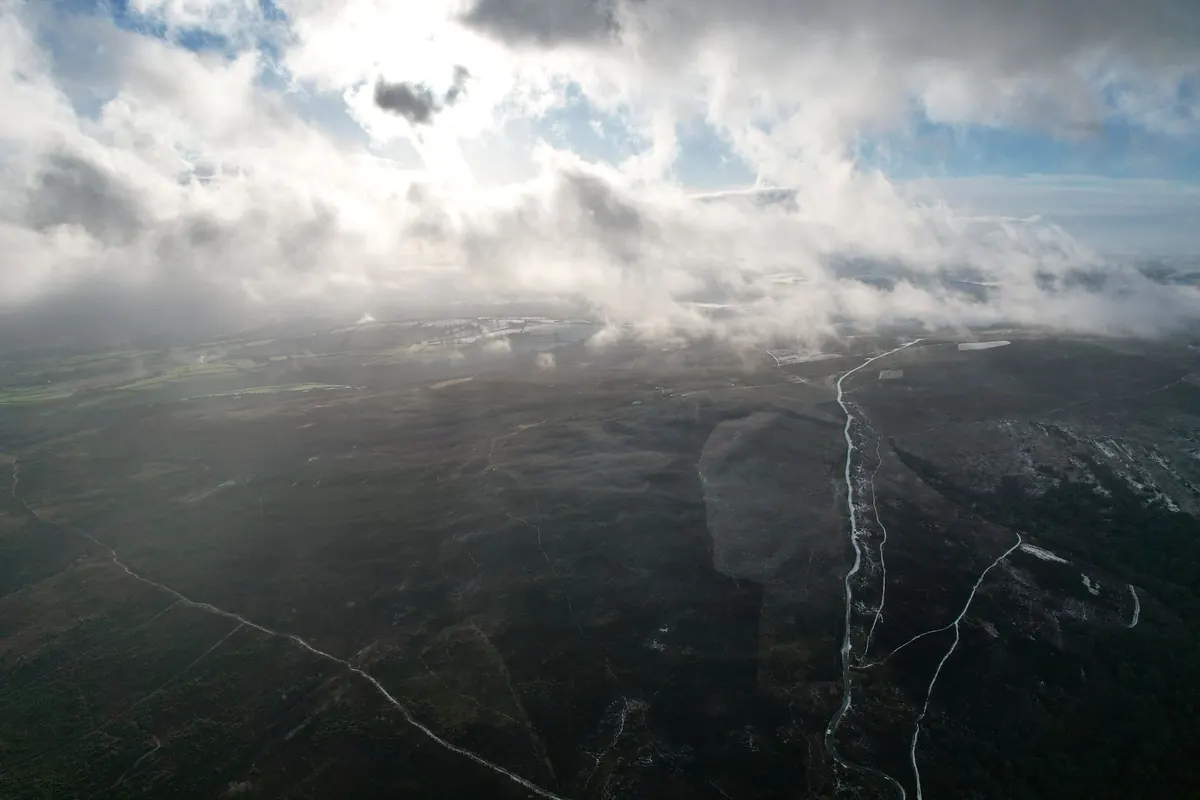
Overcast light is soft, even and directionless. There are no shadows to describe form, no highlights to separate one thing from another, and no colour variation to give a sense of distance. Everything sits on the same plane, which is why a wide view photographed under a grey sky often looks less like a landscape and more like a survey.
The mistake is not shooting in flat light. It is shooting the same subjects you would shoot in golden hour. A sweeping valley needs directional light to show depth; without it, the layers collapse into one another. Recognising that early saves you an hour of standing about, muttering at clouds.
Working With Flat Light Instead of Against It
Diffused light is genuinely useful, just not for the photographs most people have in mind when they set out. Treat it as a different brief.
Look for texture and detail
Soft light reveals surface rather than shape. Wet stone, lichen on a wall, the ribs of a sand dune, frost on grass, the grain of weathered timber — these come alive precisely because nothing is being blasted by hard sun. Move close, fill the frame with the pattern, and let the subject be the texture rather than the vista.
Find your own contrast
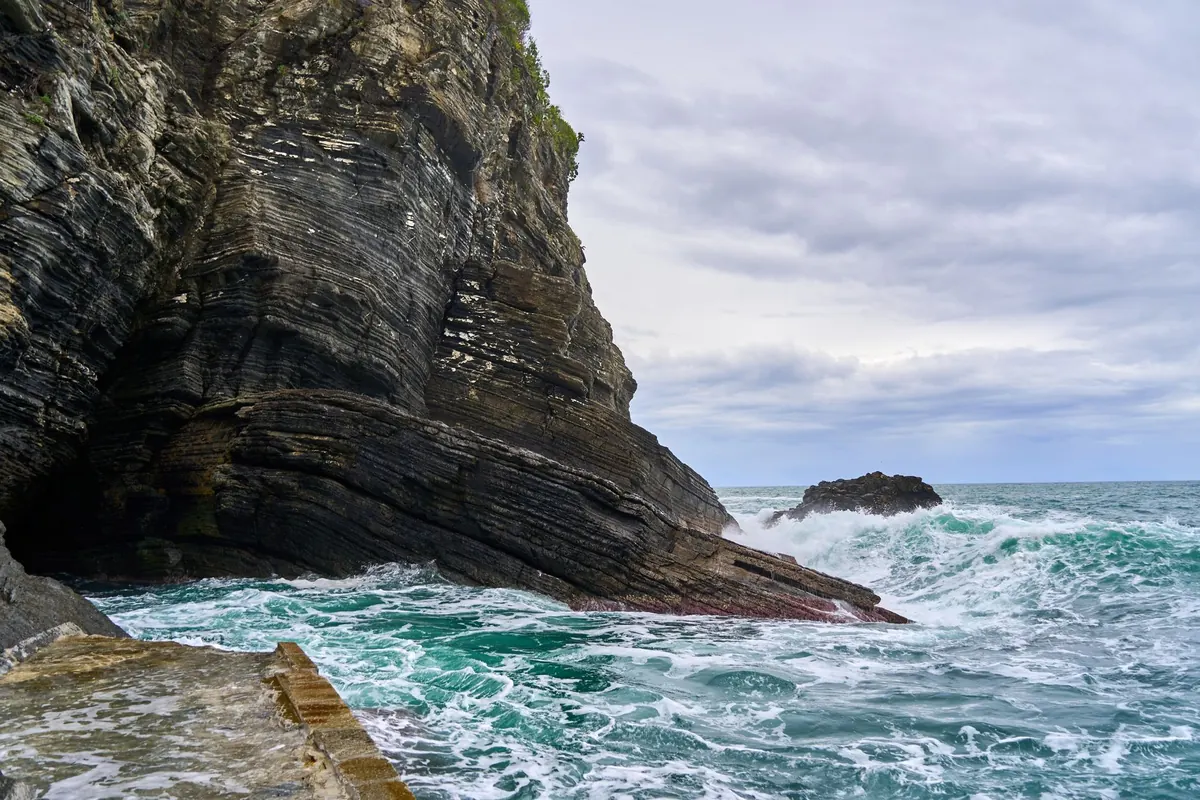
If the sky will not provide separation, something else has to. A dark tree against pale water. A black rock against moving foam. A silhouetted branch against mist. Look for the darkest and lightest things in the scene and position yourself so they sit near each other in the frame. Even in the flattest conditions, most landscapes contain far more tonal range than a quick glance suggests.
Consider black and white
Without colour to carry the image, you are forced to think about tone, shape and structure — which is exactly what flat light gives you least of, and therefore what you must hunt hardest for. A frame with real blacks, clean whites and a spread of greys between them will hold up far better than a washed-out colour version. Shoot in raw and review in monochrome on the back of the camera if it helps you see the tones.
The Cluttered Frame: Why Good Scenes Make Bad Photographs
A photograph is not a record of what a place felt like. It is a flat rectangle with edges, and everything inside those edges competes for attention. The most common cause of a weak landscape image is not technical error but indecision: trying to include everything, so the viewer's eye has nowhere to settle.
Watch for these offenders:
- Edge intrusions. A branch, a gatepost or a sliver of car park poking into the corner. Our eyes are drawn to edges, so a fragment of something irrelevant will pull attention away from the subject.
- Mergers. A tree growing out of a rock, a walker's head aligned with a distant hill, a horizon line slicing through a building. Separating these elements by moving a few paces changes the whole reading of the image.
- Two subjects. A dramatic sky and an interesting foreground both demanding to be the point of the picture. Choose one. The other becomes support.
- The untidy horizon. A line running through the middle of the frame with no reason. Place it deliberately high or low, and check it is level.
Composition Fixes You Can Apply on the Spot
None of this needs a workshop. It needs a routine, repeated until it becomes automatic.
- Name the subject. Say out loud what the photograph is about. If you cannot, you have not decided yet.
- Move your feet before your zoom. Two steps left, one step forward, crouch down. Perspective changes composition far more than focal length does.
- Patrol the edges. Before you press the shutter, run your eye around the perimeter of the frame and ask what each element is doing there.
- Simplify. Remove one thing. Then consider removing another. Most photographs improve with subtraction.
- Use foreground deliberately. A rock, a path or a clump of grass gives the eye an entry point — but only if it leads somewhere, rather than simply being near.
Editing Traps That Flatten a Photograph
Flat light often survives the edit because of how we process it. Lifting shadows across the whole frame, pushing the highlights down and adding saturation everywhere makes an image uniformly bright and uniformly dull. Contrast is a relationship between areas, not a global setting.
Work locally instead. Darken what should be dark — a shadowed bank, the underside of a cloud — and let the brighter areas stay bright. Dodge and burn in small, gentle passes rather than one heavy stroke. Be sparing with clarity and dehaze tools, which quickly produce grey halos along horizon lines and leave foliage looking metallic. A useful test: step away from the screen for five minutes, come back, and ask whether the image looks like light falling on a place, or like a filter applied to a file.
One Change to Take Into the Field
If you take a single habit from all of this, make it the pause before the shutter. Most cluttered frames and flat, hopeful photographs happen because the camera came up too quickly and the scene was never really read.
Try this on your next outing. Arrive, put the bag down, and spend two minutes looking without a camera in your hands. Decide what the picture is about. Then decide whether the light supports it or whether you should return another day. Some of the best landscape photographs are the ones that were not taken — and some of the most satisfying afternoons are the ones where you walked home empty-handed, knowing exactly why.
Photo: Little Visuals / Pexels