

Rain is difficult. Not to endure, but to write. Put a shower into a paragraph and the first words that arrive are usually the wrong ones: the same grey sky, the same heavy downpour, the same wind that howls through the same trees. Weather is the most common subject in nature writing and the easiest thing to fake. It rewards a little apprenticeship.
What follows are working methods — observation habits, word choices, structural moves — for putting rain, wind and light on the page so they read as weather rather than decoration.
Describe what the weather does, not what it is
Weather has no character of its own until it touches something. So let it touch things. Not “it was a wet morning” but a gate that has swollen in its frame; not “the wind was strong” but a line of poplars all leaning the same way while a hen refuses to leave the lee of the wall.
The test is simple. If you cut the weather word out of your sentence, does anything remain? “The rain was heavy” leaves an empty plate. “Water came off the shed roof in one rope and cut a channel through the gravel” gives the reader something to stand in. Write the consequence and let them supply the adjective. Nine times out of ten they will, and they will believe it more than anything you could have told them.
Put the weight on verbs
Adjectives describe weather; verbs make it happen. A paragraph with three weather adjectives in it usually feels sodden. A paragraph with two precise verbs feels alive. Keep a small arsenal and rotate it, because the second use of lashing in an essay is where a reader stops trusting you.
- Rain: stipples, speckles, patters, ticks, hammers, seeps, sluices, hangs, gathers, drums.
- Wind: plucks, harries, butts, paws, combs, channels, drags, leans, snaps, drops.
- Light: slants, levers, skims, flares, dulls, drains, pools, hardens, gives up.
Two per paragraph is plenty. The aim is accuracy, not performance: rain that stipples a puddle and rain that sluices a gutter are different weathers, and choosing between them is how you tell the truth.
Borrow the local words, then use them sparingly
British weather has a deep vocabulary, most of it regional, all of it more exact than anything in a thesaurus. It is worth having these in your ear:
- smirr — Scots for the finest, almost weightless drizzle, the kind that never quite falls.
- mizzle — a soft drifting drizzle, common in the south-west.
- haar — the cold sea fog that walks in off the North Sea and swallows a coastline whole.
- dreich — long, grey, wet and thoroughly dispiriting.
- snell — a wind with a bite in it.
- blashy — wet and blustery, the sort of day that soaks you sideways.
Use them where they belong. A single smirr in an essay set in Sussex can read as costume; the same word in a piece about a Fife estuary does quiet, accurate work. If you are writing about a place you did not grow up in, use the plain word and describe the thing instead.
Read the light like a photographer
Light is what most writers leave vague, and it is usually the detail that makes a scene credible. Golden hour has been worn thin. Angle and source have not. Where is the sun? What is between it and the subject — cloud, a hedge, a hillside, the inside of a wood? What is it touching, and what has it left in shadow?
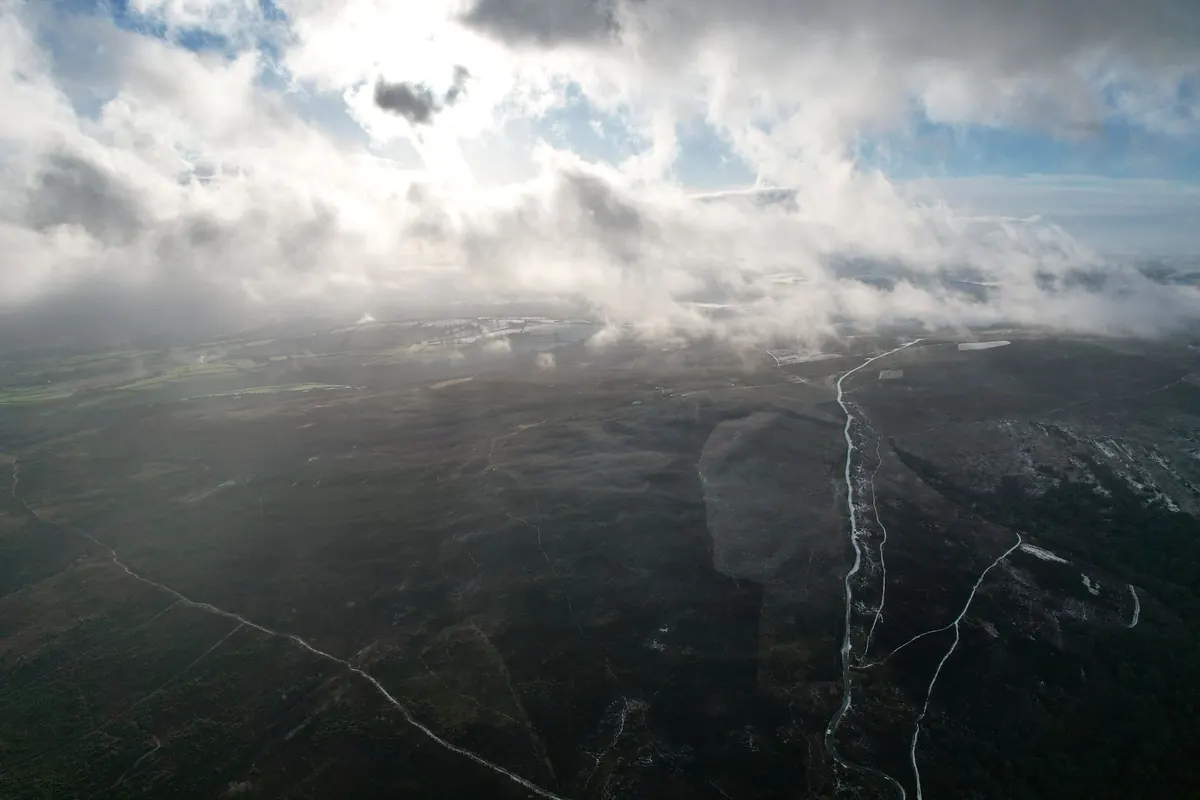
Low sun under a bank of cloud turns a wet field the colour of old cutlery. Backlight makes a shower visible as a curtain rather than a sensation. On an overcast day there is no shadow at all, only degrees of brightness, and that flatness is worth naming precisely because so few writers do. Note the time and the direction of the light in your notebook, even when you think it does not matter. One line — “sun dropping behind the western hedge, everything on this side of the lane in shade” — will anchor an entire page later.
Keep a body in the frame
Weather is not only out there. It arrives through skin, ears, nose and balance. Cold that gets into the wrists before the shoulders. The moment a headwind takes your breath on a hilltop. The change in the sound of a wood when rain starts: first a hiss high up, then a heavier drumming, then water finding its way through the canopy in separate, deliberate drips.
Use one or two of these, not five. The body is also the reader’s way into a scene, so a single physical detail will do more than a survey of every sensation available.
Give the weather a shape over time
Weather is motion, and motion has structure. The reason so much weather writing feels static is that it describes a condition instead of following a change. Choose a turning point and build the paragraph around it:
- Before. Establish the pressure, the sky, the wind direction, the small signs — birds low, leaves turned, a stillness that feels loaded.
- The turn. Wind shifts, cloud thickens, the first drops hit the dust. Spend your best verbs here.
- During. Resist the urge to rush. This is where the detail lives: what the rain is doing to the surface of a pond, how the road smells, how quickly your notebook goes soft.
- After. The pause, the light returning, the wind swinging round. A changed detail — a branch down, a stream running brown — carries the whole passage.
Even three hundred words of weather benefits from this arc. A shower with a beginning and an end is far more persuasive than an atmosphere with neither.
Break the habit of weather as mood shorthand
Pathetic fallacy is the trap: rain for grief, sun for hope, thunder for anger. It is not forbidden, but it is worn smooth, and readers feel the machinery. Try letting the weather be indifferent to your feelings. Sometimes rain falls on the most important hour of your life and does nothing but make the path slippery. That friction — the world going about its business while you are not — is far more affecting than a sky that weeps on cue.
A short practice
Ten minutes outdoors in whatever the day is doing. Stand still and write, in note form: three nouns that have been altered by the weather, three verbs for what the air is doing, one sound, one change you can see happening. Then go inside and write two hundred words of the scene without using a single adjective to describe the weather itself. Read it aloud. Cut the first sentence, which will almost certainly be a throat-clearing statement about the day.
Do that once a week through a British winter and the vocabulary problem solves itself; you will have watched drizzle, haar, squall and thaw, and you will know which word belongs to which. Write the weather you have actually stood in, and the clichés fall away on their own.
Photo: Gotta Be Worth It / Pexels