
Four woods, four different springs. A bluebell wood hands you a fortnight of extravagance and then shuts up shop. A birch wood is thin, bright and restless from March onwards. An oak wood keeps you waiting for weeks, then flushes all at once. And a pine wood looks much the same in April as it did in January — until you notice the pollen drifting like yellow smoke and realise it has been busy for a month.
Each of these woodlands has its own spring rhythm, its own wildlife and its own particular demands on anyone trying to write about it. Here is how they compare.
Bluebell Woods: One Extravagant Fortnight
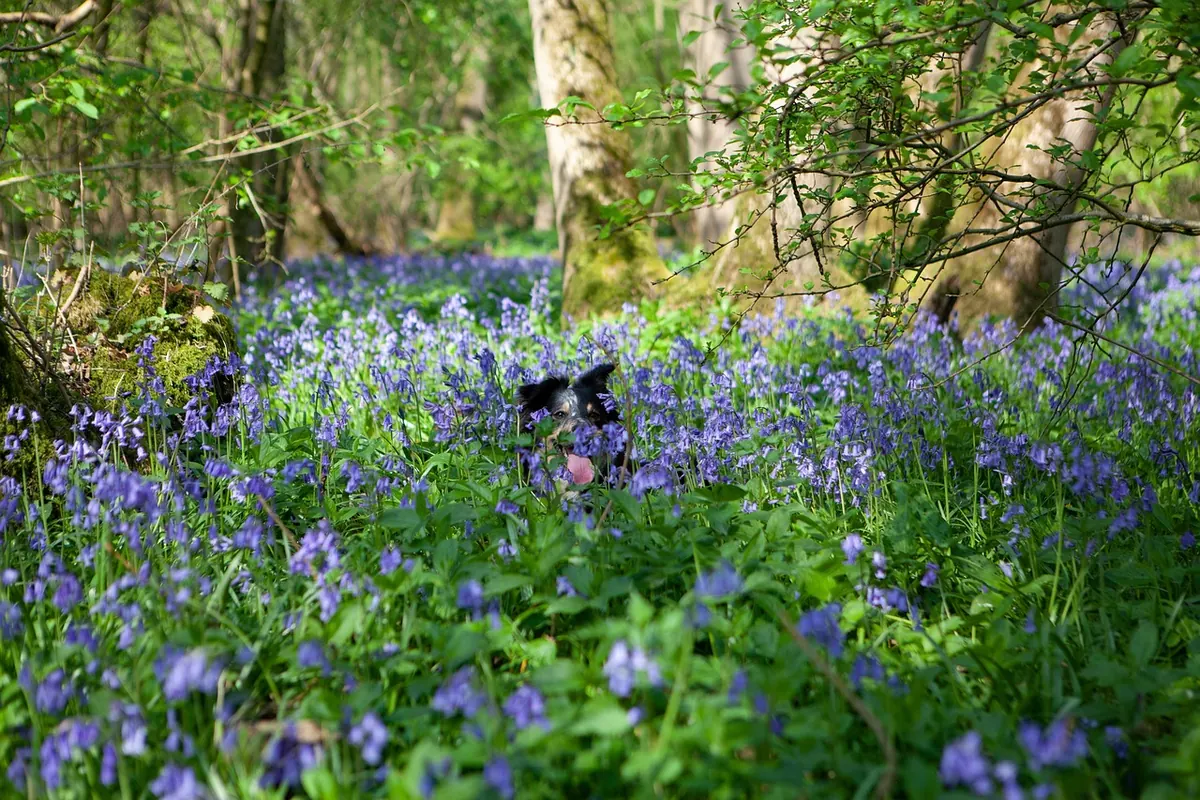
Native bluebells (Hyacinthoides non-scripta) usually open from mid-April, with the peak falling in the first half of May — earlier in the south-west, later in Scotland and at altitude. The best bluebell woods tend to be ancient woodland: sites that have been wooded for centuries, often on heavier soils with a history of coppicing. The flowers nod to one side of the stem, deep violet-blue with creamy anthers, and the scent carries on warm, still evenings.
Look for the species that travel with them: wood anemone, yellow archangel, greater stitchwort, wood sorrel, early purple orchid. Queen bumblebees are the main pollinators and are worth watching closely — they work the bells methodically, and you often hear them before you see them. Orange-tip butterflies drift along the rides. In the shrub layer, listen for willow warbler, blackcap and, in western woods, the wood warbler's spinning-coin song.
Bluebells are easily damaged. Trampled leaves mean fewer flowers the following year, and the plants take a long time to recover. Stay on the paths, even when the blue runs right up to the edge.
Birch Woods: Light, Sap and Catkins
Silver and downy birch are pioneers. You find them colonising heathland edges, old quarry floors, railway cuttings and the moorland fringe, often in loose, uneven stands rather than a dense canopy. That thin, airy cover is what makes a birch wood so particular in spring: sunlight reaches the ground almost everywhere, so the wood warms early and insects get going sooner than they do under oak.
The season starts before the leaves. Male catkins lengthen and turn yellow-brown through March and April, shedding pollen on the wind; the shorter green female catkins stand upright on the same twigs. Birch sap is rising now too, and you will often see dark weeping scars on trunks where woodpeckers have been working. If you want to try tapping, learn how from someone who knows, ask the landowner first, and take only a little from a few trees.
Birdlife suits the open structure: lesser redpoll, siskin, willow warbler, tree pipit on the heath edge. At dusk in April, woodcock go roding overhead. On the ground, green hairstreak butterflies and bilberry go together well on acid soils.
Oak Woods: The Long Wait
Pedunculate oak favours heavy lowland clays; sessile oak takes the thinner upland soils. Either way, oak is late. The buds stay tight through April, and the canopy does not close until early or mid-May in most years. That long bare-but-busy window is the whole point: it lets the ground flora finish its work in full light.
Wood anemone, dog's mercury, primrose, wood sorrel, wild garlic and bluebell all flower under bare oak. The caterpillar crop that follows is what feeds the birds. Chiffchaff arrives from mid-March, blackcap from mid-April, and the dawn chorus peaks in the last week of April and the first of May. In western oak woods, pied flycatcher and wood warbler join in; nuthatch, treecreeper and marsh tit are residents worth learning by ear.
Oak woods reward patience. Note the leafing date of one tree you can return to, and within a few years you will have a reliable local calendar.
Pine Woods: The Evergreen Exception
The native pinewoods
Scots pine woods do not announce spring with colour. The canopy is already there. What changes is subtler: pollen, resin, and the first warm days when adders and wood ants come out to bask and work.
In the Caledonian pinewoods, the ground layer is heather, blaeberry, cowberry and juniper, with twinflower and creeping lady's-tresses in the richest spots. Crossbills, crested tits, siskins and red squirrels are the specialities, and pine marten if you are quiet and lucky. Capercaillie live in a few of these woods and are easily disturbed in spring, so keep to tracks and keep dogs close.
Planted pine elsewhere
Pine woods on lowland heaths and old estates are less celebrated but still worth a visit: coal tit, goldcrest and redstart, wood ant nests built into sunny banks, and in late May clouds of yellow pollen that settle on puddles in rings.
Four Springs, Four Kinds of Writing
The practical difference between these woods is what they ask you to notice. A few prompts that work:
- Bluebell wood: dates — first flower, first proper blue haze, first day the scent carries. Then the speed of the fade.
- Birch wood: light and sound. How shadows move across a page; how birch leaves begin to rustle in the lightest wind.
- Oak wood: timing and sequence. One tree's leaf burst, the first chiffchaff, the morning the chorus doubles in volume.
- Pine wood: smell and sign. Resin, pollen, bark stripped by squirrels, ant trails, the particular quality of the quiet.
Whichever you choose, one wood visited weekly beats four woods visited once. Take a pencil rather than a pen in wet weather, and write on the spot, not from memory.
Practical Notes Before You Set Out
Go early. The hour after dawn is when birds sing hardest, the light is best for bluebells and the woods are quietest. Damp, still, mild mornings after overnight rain are ideal.
Wear boots you do not mind muddying, take a hand lens for flowers and bark, and carry a notebook and pencil. Record the date, the time, the weather and a grid reference if you have one — a year of those notes is worth more than any field guide.
Follow the Countryside Code: stay on paths where the ground is vulnerable, close gates, and keep dogs under control and away from ground-nesting birds and deer in spring. Do not pick or dig up wild flowers. Uprooting any wild plant without the landowner's permission is an offence, and bluebells in particular take years to return. Check for ticks after a day in long grass, and if you feel unwell afterwards, speak to a pharmacist or GP.
Then find a fallen log, sit down, and wait. The wood will do the rest.
Photo: TheOtherKev / Pixabay